
Celebrating Chinese New Year 2026: History, Traditions & Food (Fire Horse)


Every year, a new animal from the Chinese zodiac takes centre stage, and 2026 brings in the rare and powerful Year of the Fire Horse, which occurs once every 60 years. Chinese New Year has always held a special place in my heart. There’s something kind of magical about celebrating not according to a fixed calendar like January 1st, but based on the moon and ancient astrology.
As the Fire Horse dawns, I thought I should write about the Chinese New Year, which was long overdue on my list of blogs. After all, this one is celebrated even more widely than the Mid-Autumn Festival.
When is Chinese New Year
The Chinese New Year, though, sits close to our global calendar years, begins on a different date, and the dates change every year as it's tied to the lunar calendar. In 2026, the Chinese New Year falls on Tuesday, February 17th, marking the start of the Year of the Fire Horse. These festivities traditionally continue for 16 days, starting on Chinese New Year’s Eve and concluding with the Lantern Festival.
Broadly, the celebrations can span from January 21st to February 20th, the lunar calendar window for Spring Festival transitions.
How to Say 'Happy New Year' in Chinese
If you have local Chinese friends, or Chinese living in Malaysia, Singapore or Thailand, extending an authentic wish would be a nice gesture. It's one of the oldest traditions of Chinese New Year. Here are some wishes you can use:
Xīnnián kuàilè (新年快乐) - “Happy New Year”
Gōng xǐ fā cái (恭喜发财) - “Wishing you wealth and prosperity”
Xīnnián hǎo (新年好) - A simpler way of saying “New Year goodness”
History of Chinese New Year
Chinese New Year (a.k.a. Spring Festival) is one of the oldest celebrations in the world, tracing back over 3,000 years. Originally, it was a time to honour deities and ancestors while welcoming the arrival of spring after a long winter.

In ancient times, people believed that the year was ruled by a monster named Nian (年), who came out to harm villagers and animals on New Year’s Eve. To protect themselves, villagers used loud noises, bright colours, and fire, traditions that transformed into modern firecrackers and the vibrant décor we see today.
As centuries passed, these customs merged with family rituals and local folklore to create the different practices we now associate with the Chinese New Year.
Legends of Lunar Year
There are many legends connected with Chinese New Year, but one of the most beloved stories is about the monster Nian. The name itself means 'year', so the story is literally tied to the name of the holiday itself. Villagers noticed that Nian feared loud sounds, bright lights, and the colour red. So they began decorating their homes with red scrolls, lighting firecrackers, and wearing red. These are traditions that remain at the heart of New Year festivities today.
Another legend speaks of ancestors and gods, where people would offer sacrifices and prayers for protection and blessings in the year ahead. These stories are passed down through generations.
How to Celebrate Chinese New Year
Even if you’ve never lived through the holiday yourself, most people can imagine the warmth of a big family dinner, the joy of receiving red envelopes, or the thrill of watching a dragon dance.
Here’s what typically happens:
Family Reunion Dinner (年夜饭)
On New Year’s Eve, families travel back to their hometowns from the main cities. It’s like Thanksgiving or Christmas all rolled into one. This dinner is lavish, symbolic, and packed with dishes meant to bring luck.
Decorating with Red
Homes and streets are decked out with red decorations because red is believed to ward off evil spirits and attract good fortune.
Firecrackers and Fireworks
Like during the globally celebrated New Year, setting off firecrackers at midnight and throughout New Year’s Day is a longstanding practice. We do it for enjoyment, but the Chinese do it to scare off bad luck.
Lion and Dragon Dances
You would've seen these many times happening in your nearby Chinatown. These theatrical performances are not just fun to watch; they’re believed to bring prosperity and good luck.

Red Envelopes (红包)
Adults give children (and sometimes younger adults) red envelopes filled with money to wish them luck and safety for the coming year.
Key Traditions of Chinese New Year
The few days leading to the New Year and throughout the festivities, there are traditions the Chinese do, just like the Dragon Boat Festival and Tomb Sweeping Festival:
Cleaning the House
Before New Year’s Eve, families thoroughly clean their homes to sweep away bad luck and make space for good fortune.
Lucky Foods

Food plays an essential role, and many dishes are chosen for the words they sound like or the meanings they carry. For example:
Fish (鱼) symbolises surplus and prosperity, often left partially uneaten to represent abundance.
Dumplings (饺子) resemble ancient silver ingots, symbolising wealth.
Niángāo (年糕) is a sweet rice cake, where gao sounds like “higher,” suggesting progress and growth
Wearing New Clothes
New clothes, especially in red, are worn to represent a fresh start and attract good fortune.
Lantern Festival
The celebrations don’t end with New Year’s Day. The Lantern Festival marks the traditional close, when elaborate lanterns light up the night sky
Which Countries Celebrate Chinese New Year
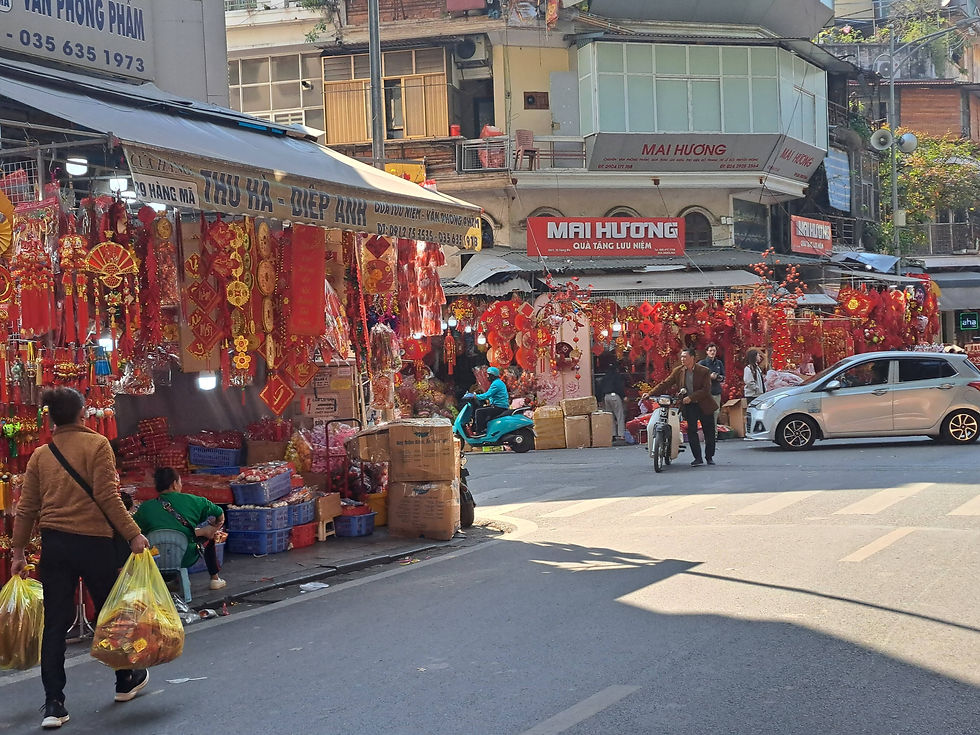
While the Chinese New Year originates from China, its influence extends far beyond. With the diaspor community spreading worldwide, the Chinese New Year is now celebrated far beyond Hong Kong, Macau and Taiwan.
Today, Singapore, Malaysia, Vietnam (where it’s known as Tết), Korea (Seollal), Indonesia, Thailand, and the Philippines celebrate the new year. Chinese communities worldwide, including in the United States, Canada, the UK, and Australia, also have celebrations for the Chinese New Year.
Why Don't Japanese Celebrate Lunar New Year?
It might surprise some to learn that Japan, despite its cultural proximity to China, does not officially celebrate the Chinese New Year. That’s because Japan adopted the Gregorian calendar in the 19th century and shifted its New Year celebration to January 1st, now known as Shōgatsu.
Before that change, Japan did follow a lunar calendar similar to China’s, but modernisation led to the calendar switch. Even today, pockets of Chinese communities in places like Yokohama’s Chinatown celebrate Lunar New Year with festivals, but it’s not a national holiday in Japan.
What is the Animal of the 2026 and 2027 Chinese Lunar Year

The Chinese zodiac cycles every 12 years, with each year matched to an animal sign. In 2026, we welcome the Year of the Horse, more specifically the Fire Horse. According to tradition, Fire Horse years are rare and powerful. People born in Fire Horse years are thought to be passionate, dynamic, and bold, full of energy and ready to make big moves.
The year 2027 continues the elemental cycle with the Year of the Goat, also carrying the Fire element. The Goat (sometimes translated as the Sheep or Ram) brings a completely different kind of energy compared to the Horse. While the Fire Horse is dynamic and untamed, the Fire Goat is warm, artistic, and emotionally expressive.
Should I Say Lunar New Year or Chinese New Year?
In China and many Chinese communities, the preference is often Chinese New Year, because the holiday holds deep cultural and historical roots specific to Chinese tradition. Lunar New Year is a broader term. It’s often used by Chinese-Americans, Koreans, and other communities because several cultures observe their own lunar new year celebrations.
From my experience on Rednote, the local Chinese prefer 'Chinese New Year' and its safer to say this.
Before I Wind Up
Chinese New Year is more than a holiday; it’s a living, breathing celebration of culture, family, luck, and tradition. From the spirited energy of the Fire Horse to the symbolism behind every dumpling and firecracker, the festival invites everyone to start fresh, hope big, and enjoy the warmth of togetherness.
Whether you’re watching a dragon dance, sharing a reunion dinner with loved ones, or simply wishing someone Gōng xǐ fā cái, there’s a beauty in how this ancient tradition continues to connect people around the world.


Comments